

This post outlines the three core tenets, often referred to as the “Three Golden Rules,” that form the foundation of the teachings of Guru Nanak, the founder of Sikhism. These principles provide a practical and ethical framework for living a fulfilling and spiritual life, emphasizing honest labor, selfless service, and remembrance of God. Understanding and practicing these rules is considered essential for any Sikh seeking to connect with the divine and contribute positively to the world.
The Three Golden Rules
Guru Nanak’s teachings are profound yet practical, offering a path to spiritual enlightenment through everyday actions. These teachings are often summarized into three fundamental principles, which serve as a guide for Sikhs and anyone seeking a meaningful life:
-
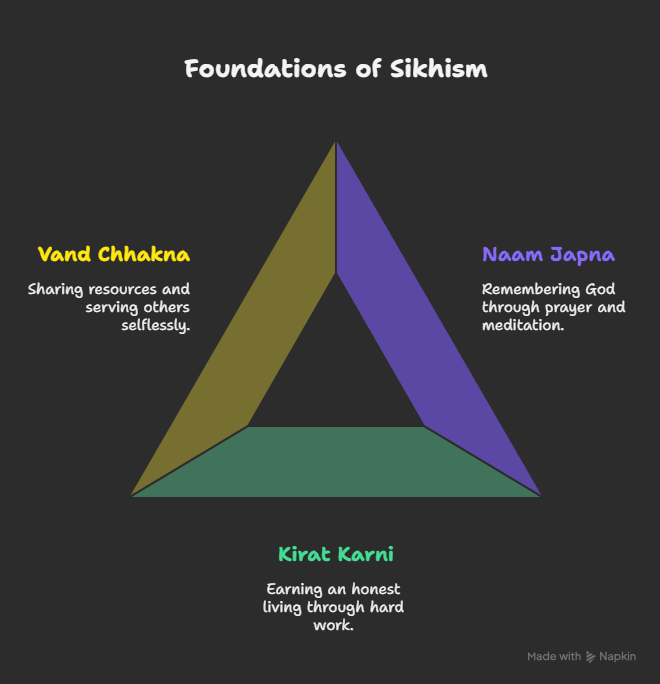
Kirat Karni (Honest Living): Earning a livelihood through honest labor and ethical means.
-
Naam Japna (Remembering God): Constant remembrance of God through meditation, prayer, and contemplation.
-
Vand Chhakna (Sharing with Others): Sharing one’s resources and blessings with those in need.
Let’s delve deeper into each of these principles:
1. Naam Japna (Remembering God)
Naam Japna literally translates to “chanting the Name.” However, it encompasses far more than just the repetition of a word. It signifies the continuous remembrance of God, not just through vocal prayer, but through every thought, word, and deed. It is about cultivating a constant awareness of the divine presence in all aspects of life.
Key Aspects of Naam Japna:
-
Meditation and Prayer: Engaging in regular meditation and prayer to connect with the divine. This could involve reciting hymns (Gurbani), chanting the name of God (Waheguru), or simply spending time in quiet contemplation.
-
Contemplation: Reflecting on the nature of God, the purpose of life, and the teachings of the Gurus. This helps to deepen one’s understanding and connection with the divine.
-
Living a Virtuous Life: Acting in accordance with God’s will, which involves living a life of honesty, compassion, and service. This is seen as a form of prayer in itself.
-
Seeing God in All: Recognizing the divine presence in all beings and treating everyone with respect and love. This fosters a sense of unity and interconnectedness.
Benefits of Naam Japna:
-
Spiritual Growth: Deepens one’s connection with God and fosters spiritual growth.
-
Inner Peace: Cultivates inner peace, tranquility, and contentment.
-
Reduced Ego: Helps to reduce ego and develop humility.
-
Improved Relationships: Enhances relationships with others by fostering compassion and understanding.
-
Guidance and Wisdom: Provides guidance and wisdom in navigating life’s challenges.
2. Kirat Karni (Honest Living)
Kirat Karni emphasizes the importance of earning a livelihood through honest labor and ethical means. It rejects the notion of asceticism or dependence on others and promotes self-reliance and hard work. It means earning your living through your own effort, without exploiting or deceiving others.
Key Aspects of Kirat Karni:
-
Honest Labor: Engaging in work that is ethical, honest, and beneficial to society.
-
Self-Reliance: Being self-sufficient and not relying on others for support unless absolutely necessary.
-
Diligence and Hard Work: Putting in effort and dedication to one’s work.
-
Avoiding Exploitation: Refraining from exploiting or deceiving others in the pursuit of wealth.
-
Fairness and Justice: Treating employees and customers fairly and justly.
Benefits of Kirat Karni:
-
Self-Respect: Fosters self-respect and dignity.
-
Financial Stability: Provides financial stability and security.
-
Social Contribution: Allows individuals to contribute to society through their work.
-
Ethical Conduct: Promotes ethical conduct in all aspects of life.
-
Spiritual Growth: Earning an honest living is seen as a form of service to God and contributes to spiritual growth.
3. Vand Chhakna (Sharing with Others)
Vand Chhakna emphasizes the importance of sharing one’s resources and blessings with those in need. It promotes selfless service, compassion, and generosity. It is about recognizing that all resources are ultimately gifts from God and should be shared with others, especially those who are less fortunate.
Key Aspects of Vand Chhakna:
-
Sharing Resources: Sharing one’s wealth, food, knowledge, and skills with others.
-
Selfless Service (Seva): Volunteering time and energy to help others without expecting anything in return.
-
Compassion and Empathy: Developing compassion and empathy for those who are suffering.
-
Giving to Charity: Donating to charitable organizations that support those in need.
-
Community Involvement: Participating in community activities that benefit others.
Benefits of Vand Chhakna:
-
Reduced Ego: Helps to reduce ego and develop humility.
-
Increased Compassion: Fosters compassion and empathy for others.
-
Social Harmony: Promotes social harmony and unity.
-
Spiritual Growth: Sharing with others is seen as a form of service to God and contributes to spiritual growth.
-
Contentment and Fulfillment: Brings contentment and fulfillment to life.
Conclusion
The Three Golden Rules of Guru Nanak – Naam Japna, Kirat Karni, and Vand Chhakna – provide a comprehensive framework for living a spiritual and ethical life. By remembering God, earning an honest living, and sharing with others, individuals can connect with the divine, contribute positively to society, and find true happiness and fulfillment. These principles are not just religious doctrines but practical guidelines for living a meaningful and purposeful life in the modern world. They encourage a balanced approach, integrating spiritual practice with ethical conduct and social responsibility. By embracing these principles, individuals can strive to become better human beings and contribute to a more just and compassionate world.